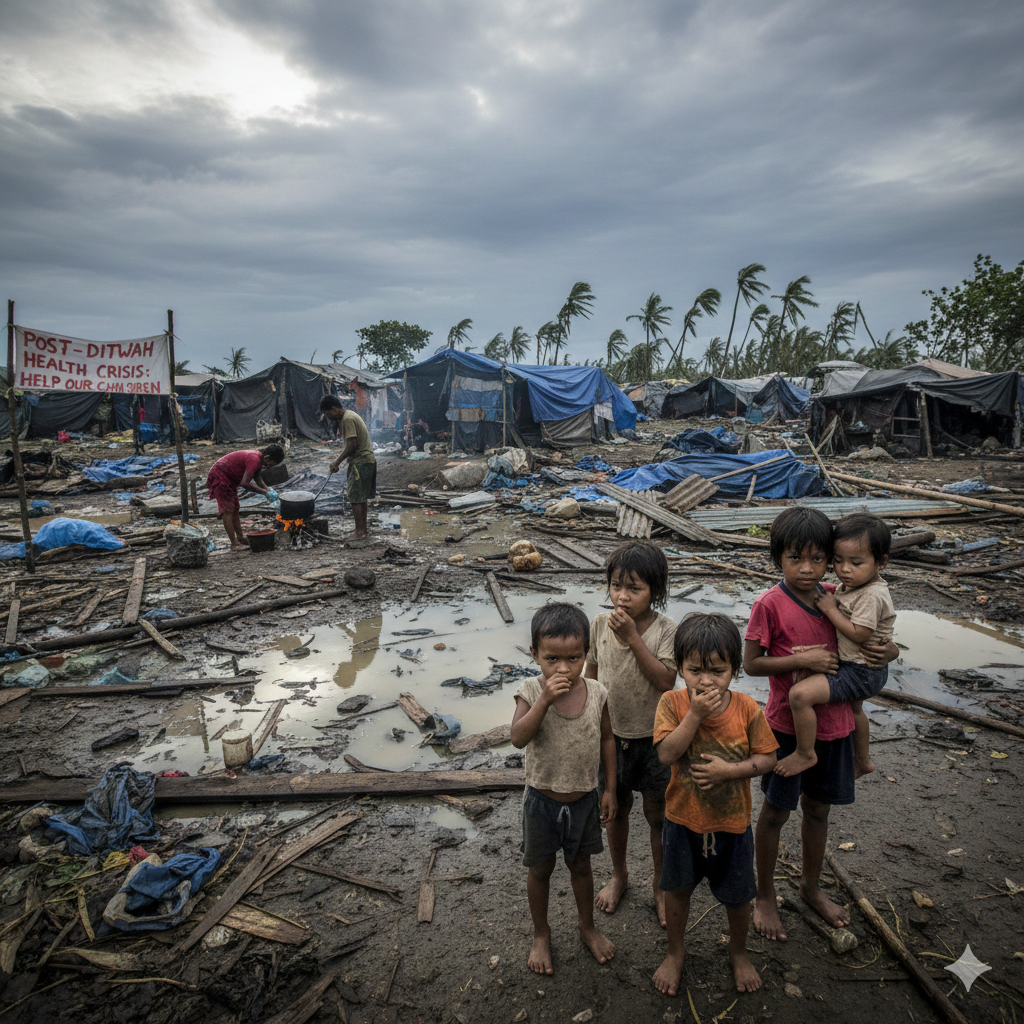
Sri Lanka experienced unprecedented torrential rains associated with the Ditwah cyclone in recent days. Beyond the immediate disruption and displacement, the weeks following such extreme weather events can pose significant health risks, particularly for children. Their developing immune systems, smaller body size, and dependence on caregivers make them especially vulnerable to infections, injuries, and environmental hazards.
This article aims to raise public awareness of the health concerns likely to arise in the aftermath of the cyclone and outline measures that families can take to protect their children.
1. Waterborne Infections
Floodwater frequently becomes contaminated with sewage, greatly increasing the spread of waterborne diseases. It is essential that children drink only boiled or bottled water during this period.
• Diarrhoeal Illnesses: Acute watery diarrhoea and dysentery tend to rise after floods. Infants and young children can become dehydrated very quickly, so prompt and adequate hydration is vital.
• Typhoid Fever: Poor sanitation and contaminated drinking water increase the risk of typhoid, particularly in overcrowded shelters.
• Hepatitis A and E: These viruses spread easily when access to clean drinking water is limited.
• Typhoid Fever: Poor sanitation and contaminated drinking water increase the risk of typhoid, particularly in overcrowded shelters.
• Hepatitis A and E: These viruses spread easily when access to clean drinking water is limited.
2. Leptospirosis
Children who walk or play in stagnant water are at high risk of leptospirosis, a serious bacterial infection transmitted through water contaminated with animal urine. Early symptoms may mimic a simple viral illness, fever, headache, muscle pain but the disease can progress rapidly to jaundice, kidney failure, myocarditis, or pulmonary haemorrhage. Early recognition and medical attention are essential.
3. Respiratory Illnesses
Crowded temporary shelters create an ideal environment for the spread of respiratory infections. Good ventilation and keeping children warmly dressed can help reduce risk. Individuals with coughs or colds staying in communal settings should be offered face masks. Cough etiquette, avoiding touching the face, and frequent hand washing remain simple but effective preventive strategies
• Viral Infections: Influenza, RSV, and common colds spread quickly in overcrowded areas.
• Pneumonia: A leading cause of post-disaster illness and death among young children.
• Asthma and Wheezing: Damp, mouldy environments and emotional stress can worsen symptoms.
4. Vector-Borne Diseases
Mosquito breeding increases rapidly in stagnant water left behind after flooding.
Dengue fever and Chikungunya often surge in the post-cyclone period. Eliminating mosquito breeding sites, keeping children appropriately clothed, using mosquito nets, and applying repellents are practical steps to reduce risk.
Any child or adult with fever lasting more than two days should undergo a Full Blood Count (FBC) to help exclude dengue
5. Skin Conditions
Prolonged exposure to contaminated water can lead to several skin problems:
• Impetigo and other bacterial infections
• Fungal infections such as tinea
• Eczematous rashes caused by continuous dampness
• Wound infections from minor cuts exposed to floodwater
If untreated, these infections can progress to cellulitis or even sepsis. Keeping the skin clean and dry and avoiding unnecessary contact with floodwater are key preventive measures.
6. Injuries and Drowning Risks
Flood conditions significantly increase the risk of:
• Drowning, especially in toddlers who may wander into water unnoticed
• Injuries from hidden debris, sharp objects, or collapsing structures
• Electrical injuries from submerged or exposed wiring
Drowning remains one of the leading causes of child mortality during disasters, underscoring the need for constant supervision.
7. Nutritional Risks
Displacement, illness, and disruption of food supplies can contribute to:
• Acute malnutrition
• Micronutrient deficiencies
• Feeding difficulties among infants, particularly when mothers experience stress or illness
Ensuring access to safe, adequate nutrition should be a priority in relief efforts.
8. Mental Health Impact
Children may struggle emotionally during and after such events. Possible reactions include:
• Anxiety
• Sleep disturbances
• Separation anxiety
• Acute stress
• Post-traumatic symptoms
Providing reassurance, maintaining familiar routines when possible, and encouraging children to express their feelings can help support their emotional well-being. Community-level psychosocial support is also essential.
9. Challenges in Managing Chronic Illnesses
Children with long-term health conditions may experience complications due to:
• Limited access to regular medications (e.g., for asthma or epilepsy)
• Disrupted clinic visits
• Increased susceptibility to illness during stressful conditions
Caregivers should attempt to maintain medication supplies and ensure early review if symptoms worsen.
10. Disruptions to Routine Medical Care
Vaccination schedules and routine clinic appointments may be delayed. Caregivers should priorities rescheduling these visits once services resume, as timely immunization is essential to prevent further outbreaks.
Prevention and Mitigation Strategies
• Ensure safe water and sanitation:
Boil or chlorinate drinking water; practice good hand hygiene and safe food handling.
• Avoid contact with floodwater:
Children should not bathe or play in stagnant or contaminated water.
• Strengthen mosquito control:
Use nets and repellents, keep the environment clean, and regularly inspect for breeding sites.
• Support children’s mental health:
Provide safe spaces, reassurance, and opportunities for emotional expression in shelters.
Conclusion
While floods are an inevitable part of Sri Lanka’s climate patterns, the health risks faced by children can be significantly reduced through awareness, preparedness, and timely medical intervention. By recognizing potential post-cyclone illnesses early and adopting preventive measures, families and communities can help safeguard the well-being of our youngest and most vulnerable population.
Prepared by:
Dr. Maheshaka Wijayawardena
Consultant Paediatrician
Base Hospital, Marawila